New York City sprawls across 300 square miles with 472 subway stations, and choosing where to stay can make or break your trip. Each neighborhood’s proximity to a subway station can significantly impact convenience and access for visitors, making it easier to reach major attractions and navigate the city efficiently. Each neighborhood in New York City functions like a distinct town, complete with its own character, dining scene, and pace of life. Choosing the right neighborhood in New York City shapes the entire experience of visitors, from how much time you spend on transit to whether you feel immersed in local culture or surrounded by fellow tourists.
What separates a great location from a mediocre one comes down to density, vibe, and access. Midtown Manhattan averages 70,000 people per square mile compared to Brooklyn’s 35,000. Some areas offer 10+ subway lines within walking distance, while others rely on just a few. The difference between staying in a tourist-saturated zone versus a residential neighborhood affects everything from your morning coffee to your evening plans.
The eight neighborhoods in this guide emerged from cross-referencing travel expert recommendations, hotel review aggregations, and transit data. Each scored highly for accessibility, safety, dining options, and overall traveler satisfaction across different budgets and trip purposes.
How We Chose the Best Neighborhoods to Stay in NYC
Selecting the best neighborhoods to stay in New York required a weighted evaluation that mirrors real traveler decision-making. The criteria focused on factors that directly impact your daily experience during a trip.
Proximity and transportation:
- Top neighborhoods provide access to 70% of popular tourist attractions within 15 minutes by subway or on foot.
- Areas served by multiple subway lines enable coverage of the entire city without constant transfers.
- Hotel prices in New York City are among the most expensive globally, with budget hotels typically costing $300 or less per night, making location efficiency critical for value.
Safety and atmosphere:
- Safety is high in most Manhattan areas below 110th Street, specifically in Tribeca, Flatiron, and the Village.
- Crime data shows these neighborhoods average fewer than 5 incidents per 1,000 residents.
Dining and local character:
- Neighborhoods differ in dining options and local vibe.
- The Flatiron District hosts 150+ restaurants per square mile.
- The Upper East Side offers a calmer, more residential atmosphere with fewer dining options.
Hotel availability and value:
- Budget ranges from $150 for hostel-style accommodations to $600+ for luxury hotels.
- The sweet spot for 4-star properties is $200-500 per night.
- Walk Score requirements of 90+ ensure neighborhoods support extensive exploration on foot, reducing taxi and rideshare costs by $50 or more daily.
These criteria matter differently depending on who you are. First-time visitors typically prioritize centrality—data shows 80% choose areas like mid town for their first trip. Families seek space and safety, making the upper west a natural fit. Foodies gravitate toward Michelin-dense zones, while budget travelers hunt for value pockets in outer areas.
Top 8 Best Neighborhoods to Stay in New York City
1. Midtown Manhattan
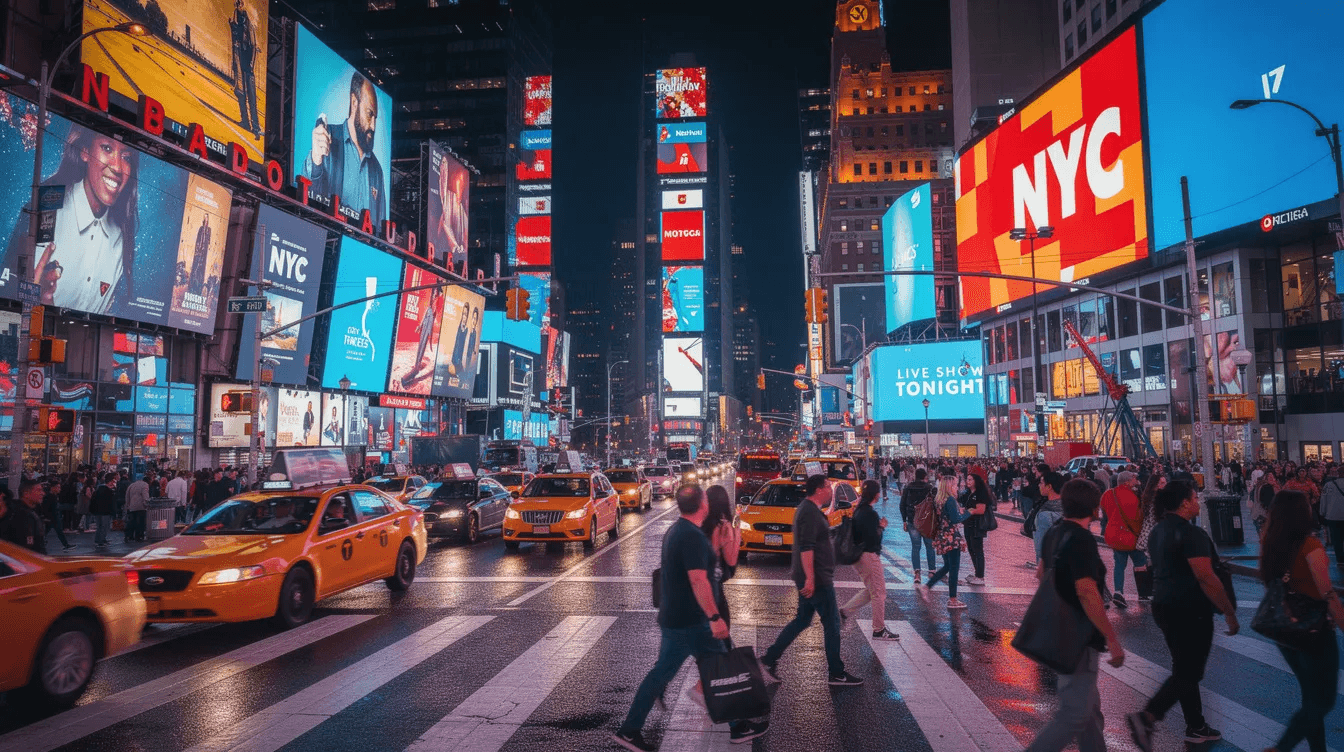
Midtown Manhattan sits at the geographic and cultural heart of new york, bounded roughly by 14th Street to the south and 59th Street to the north. It houses approximately 25% of NYC’s 70,000 hotel rooms and serves as the default choice for millions of visitors annually.
Why It Stands Out
Midtown Manhattan is considered the best location for first-time visitors who want to experience the energy of New York City, as it is home to iconic sights like times square and central park. The central location means most attractions in Midtown are walkable or accessible by a short subway ride. No other neighborhood delivers this concentration of must-see destinations within easy walking distance.
For first-time visitors to New York City, staying in Midtown is often recommended due to its central location and proximity to major tourist attractions. The area functions as NYC’s transportation nucleus, with 12 subway lines converging here—the highest density anywhere in the city.
Best For
First-time visitors, business travelers near penn station or grand central station, and anyone focused on sightseeing efficiency.
Key Strengths
- Direct access to times square (50 million visitors annually), the empire state building, rockefeller center, and bryant park
- Central park’s southern entrance sits just blocks north of the theater district
- Grand central terminal and Penn Station provide connections to airports, with JFK reachable in approximately 45 minutes via AirTrain
- The theater district puts Broadway’s 1,000+ annual shows within a few blocks of most hotels
- Hotel density means competitive options across all price points
Possible Limitations
- Relentless crowds create peak densities of 200 people per square foot in tourist zones
- Street noise levels range from 70-90 decibels throughout the day
- Average hotel rates run $400/night, roughly 20% above the city average
- Tourist traps inflate meal prices by 30% compared to other neighborhoods
Staying in Midtown Manhattan offers the advantage of being centrally located, providing easy access to major tourist attractions like Central Park and Times Square, but it can be overwhelming due to the constant crowds and noise.
Pod Times Square is often cited as one of the best value options in Midtown Manhattan, offering small, affordable rooms. Other options like CitizenM Times Square ($250-350) feature self-check-in and 20th-floor gyms with skyline views, while Pod 51 ($180-280) offers rooftop deck access at more accessible rates.
2. West Village
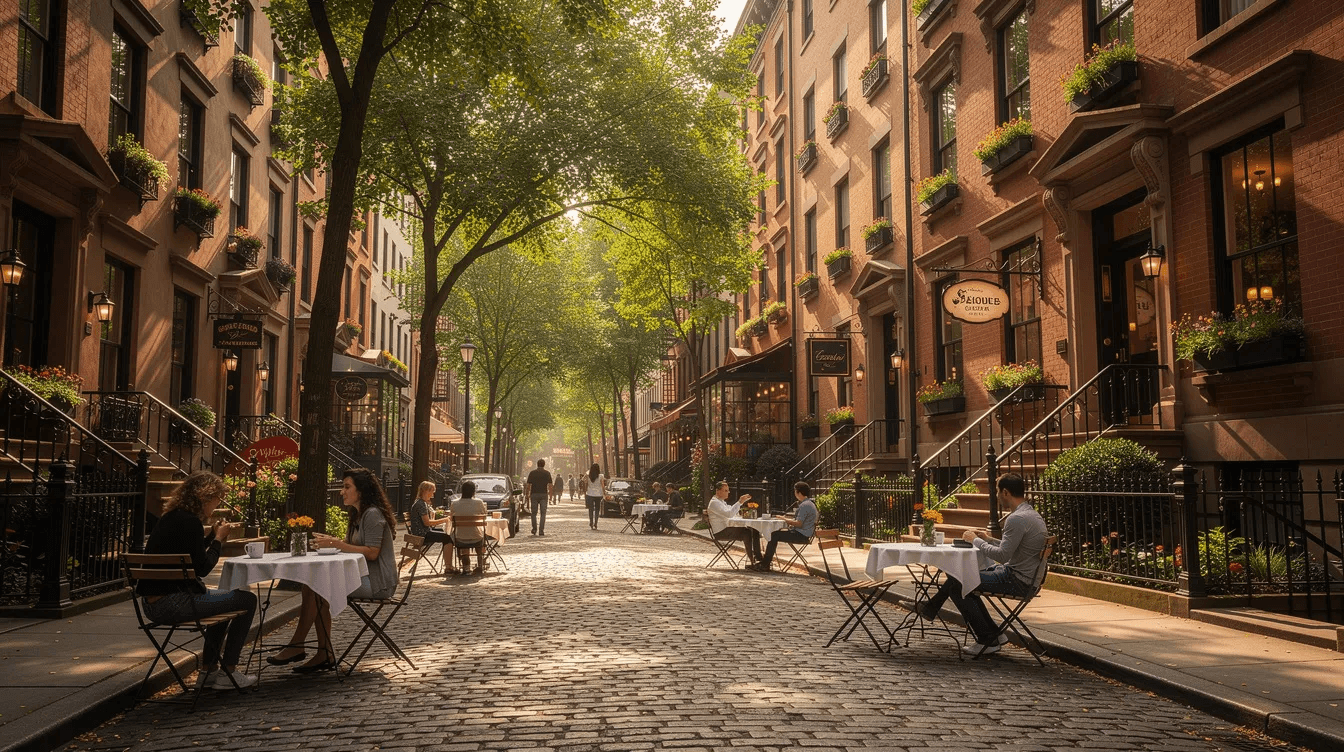
The West Village occupies a bohemian enclave south of 14th Street and west of 6th Avenue, where 19th-century townhouses line streets that deliberately evade Manhattan’s rigid grid system. The organic layout creates an almost European feel that sets it apart from every other part of new york city.
Why It Stands Out
The West Village is characterized by its charming streets, historic brownstones, and a relaxed atmosphere, making it ideal for visitors seeking a more local experience away from the tourist crowds. Greenwich Village/West Village features iconic streets, NYU culture, cafes, and a more relaxed nightlife vibe. The neighborhood’s Walk Score of 99 reflects near-perfect pedestrian accessibility through its twisting cobblestone streets.
Within 0.4 square miles, you’ll find 200+ independent shops and 100+ restaurants. Washington square park anchors the eastern edge, offering people-watching and street performances in a setting that feels authentically very new york.
Best For
Romantic getaways, culture enthusiasts, dining-focused visitors, and anyone seeking charm over convenience.
Key Strengths
- Cobblestone streets and historic brownstones create a movie-set atmosphere
- Restaurant scene ranges from Babbo (3 Michelin stars) to casual neighborhood favorites
- Boutique shopping at independent shops like Three Lives bookstore
- Historic sites including Stonewall Inn, a designated LGBTQ landmark
- East and west village areas together form one of the city’s most walkable zones
Possible Limitations
- Scarce hotel options with under 2,000 rooms total, averaging $450+ per night
- Rental and hotel prices run 25% higher than Midtown according to Zillow data
- 25-minute subway ride to Times Square
- Limited major attractions within the immediate area
The Jane Hotel ($200-300) offers nautical-themed pod-style rooms that provide boutique hotel immersion at relatively accessible prices for this premium neighborhood.
3. Flatiron District
The Flatiron District spans roughly 14th to 30th Streets around Broadway, anchored by the iconic 1902 flatiron building—one of New York’s first skyscrapers featuring a steel frame. Adjacent NoMad (North of madison square park) has merged into this zone, creating what many consider the city’s most balanced neighborhood for visitors.
Why It Stands Out
The Flatiron District is considered a great choice for travelers looking for a balance between the energy of Midtown and a more local atmosphere, making it ideal for both first-time and returning visitors. Here, you get all the benefits of a central Manhattan location—easy access to major attractions, vibrant dining, and a genuine local vibe—without the overwhelming crowds and chaos of Midtown.
Madison square park provides 20 acres of greenery and serves as the birthplace of Shake Shack. The empire state building sits just a 5-minute walk away, placing major attractions within easy access without the Midtown chaos.
Best For
All traveler types, especially those wanting convenience combined with neighborhood character. The Flatiron District and NoMad are known for their excellent food and drink options, making them popular areas for dining in New York City.
Key Strengths
- Supreme walkability with the empire state building, union square, and great restaurants all within a few streets
- 150+ dining spots per square mile including trendy options like ABC Kitchen
- Six subway lines (N/Q/R/W among them) enable 85% city coverage without transfers
- Madison square park offers respite from urban intensity with public art installations
- Business district energy during the day transitions to a more relaxed evening atmosphere
- Offers all the benefits of a central location, vibrant dining, and a local vibe without Midtown’s overwhelming crowds
Possible Limitations
- Daytime business buzz can feel impersonal until evening
- Moderate nightlife compared to east village or downtown manhattan
- Hotel rates average $300-450 per night
Hotels like Arlo NoMad ($250-400) feature large windows with city views and rooftop bars. The Ace Hotel ($220-350) blends vintage and modern aesthetics. Broadway Plaza ($250-400) benefits from the pedestrianized sections of Broadway.
4. Upper West Side
The upper west side stretches from 59th to 110th Street between central park West and the Hudson River, established as a 1900s residential haven characterized by Beaux-Arts apartment buildings and tree lined streets. The Upper West Side is a quieter, tree-lined residential area situated between Central Park and Riverside Park.
Why It Stands Out
This residential neighborhood offers an upscale respite that appeals to Central Park’s 42 million annual visitors seeking accommodations away from tourist density. Crime rates run 40% below the Manhattan average, making it one of the safest areas in the city.
Cultural institutions cluster here, with Lincoln Center drawing 5 million attendees annually and the American Museum of Natural History welcoming another 5 million visitors each year.
Best For
Families seeking space and safety, repeat visitors to new york who’ve done the tourist circuits, and anyone wanting a quieter alternative to Midtown.
Key Strengths
- Tree lined streets create a residential atmosphere rare in Manhattan
- Direct central park access for morning runs, afternoon strolls, or playground time
- Lincoln Center, the Metropolitan Opera, and world-class museums provide cultural programming
- Hotels like the Beacon ($250-400) offer family suites with kitchenettes near good subway connections
- Peaceful atmosphere with excellent safety record
Possible Limitations
- 30-minute trek to downtown manhattan attractions
- Subdued nightlife compared to trendy neighbourhoods further south
- Fewer hotel options with roughly 3,000 rooms in the area
The Beacon Hotel consistently earns recommendations as an ideal family base away from times square’s intensity, offering the space and amenities that families need.
5. SoHo
SoHo (South of Houston Street) transformed from a 1970s loft conversion zone into one of New York’s premier shopping and architectural destinations. The neighborhood contains the largest concentration of cast-iron facades outside of Paris.
Why It Stands Out
SoHo is known for cobblestone streets, high-end shopping, and top-tier restaurants. The 300+ boutiques range from Prada flagship stores to local designers like Rag & Bone. Adjacent Nolita adds trendy eateries, while 80 galleries maintain the neighborhood’s artistic roots.
SoHo, Greenwich Village, and the lower east side offer excellent nightlife, boutiques, and a younger, bohemian vibe. The architectural tours alone justify staying here for design enthusiasts.
Best For
Fashion lovers, young professionals, shopping enthusiasts, and those with generous budgets.
Key Strengths
- Designer shopping across three price tiers from luxury flagships to emerging labels
- Cast-iron architecture creates one of NYC’s most photogenic streetscapes
- Restaurant scene includes Prince Street Pizza and upscale dining options
- Art galleries maintain cultural credibility beyond commerce
- Proximity to greenwich village and lower east side expands evening options
Possible Limitations
- Hotel rates average $400-600 per night, running 50% above city average
- Daytime crowds can overwhelm the cobblestone streets
- Tourist-heavy atmosphere, particularly on weekends
- Limited family-friendly activities
Luxury properties like the Mercer Hotel ($500+) cater to the fashion crowd, while options like the Soho Grand provide slightly more accessible entry points to this premium neighborhood.
6. Williamsburg, Brooklyn
Williamsburg emerged as Brooklyn’s hipster heart following the DOMINO Sugar refinery redevelopment, now attracting 5 million visitors annually to its waterfront parks and indie dining scene.
Why It Stands Out
Williamsburg features stunning skyline views of Manhattan and unique boutique shopping. Williamsburg in Brooklyn is known for its vibrant atmosphere, trendy restaurants, and easy access to lower Manhattan, making it a popular choice for visitors looking for a different experience from Manhattan.
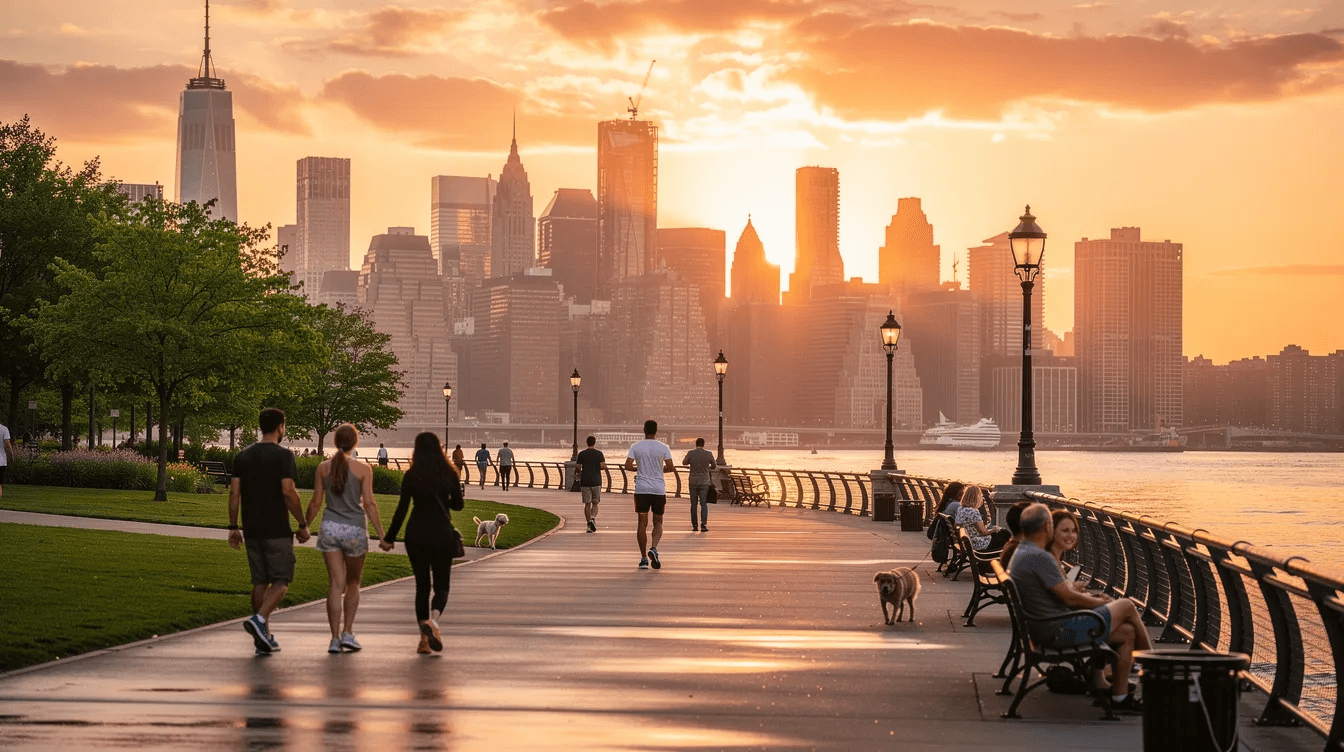
Domino park along the east river provides waterfront green space with Manhattan skyline views rivaling any rooftop bar observation deck. The neighborhood’s 200+ independent eateries include destinations like Llama Inn that draw food tourists from around the world.
Best For
Williamsburg in Brooklyn is recommended for travelers who have already experienced the main tourist attractions and are looking for a more local and trendy atmosphere. Younger travelers, food enthusiasts, and those seeking authentic local experiences will find their pace here.
Key Strengths
- Waterfront parks including domino park and East River State Park offer iconic skyline views
- Williamsburg is celebrated for its diverse food scene, offering a wide range of restaurants and bars that cater to various tastes and budgets, making it a lively area for dining and nightlife
- Cool neighborhoods vibe with independent shops, vintage stores, and local designers
- Nightlife scene evolved from the Output club legacy into diverse options
- Hotel development boom brought properties like Wythe Hotel ($300-500)
Possible Limitations
- While Brooklyn and Williamsburg offer a charming atmosphere with great food and local experiences, they are far from many of the main tourist sights in Manhattan, which can be inconvenient for first-time visitors
- 20-45 minute commutes to major attractions via the L train
- Limited traditional sightseeing within the neighborhood
- Can feel disconnected from Manhattan’s energy
7. Financial District
The financial district occupies Manhattan’s southern tip, encompassing historic wall street and the rebuilt World Trade Center complex. The area represents both New York’s colonial origins and its post-9/11 resilience.
Why It Stands Out
Lower Manhattan is a well-connected hub with plenty to see, including the 9/11 Memorial and Battery Park, making it a convenient base for exploring both Manhattan and Brooklyn. One World Trade Center’s observation deck delivers city views, while the neighborhood’s hotel pricing averages $220 per night—among the lowest in Manhattan.
The Financial District often has hotel bargains on weekends and holidays when business travelers depart.
Best For
History buffs, budget-conscious travelers, and business visitors. The 9/11 Memorial draws 20 million visitors annually, while ferry access to the Statue of Liberty and brooklyn bridge park adds appeal.
Key Strengths
- One World Trade Center and 9/11 Memorial provide meaningful historical context
- Ferry terminals offer access to the Statue of Liberty and staten island
- Wall street and the New York Stock Exchange deliver iconic photo opportunities
- Subway density rivals Midtown with access to most lines
- Largest hotel rooms in Manhattan at competitive prices
- Brooklyn bridge and downtown brooklyn sit within easy walking distance
Possible Limitations
- Lower Manhattan is well-connected by public transit, making it easy to reach other parts of the city, but it can feel lifeless on weekends when many office workers leave the area
- Office district atmosphere dominates weekday hours
- 20-30 minute subway rides to Midtown attractions
- Limited evening dining options compared to residential areas
Hotels like Artezen and Mint House ($250-400) offer kitchenette facilities and attract extended-stay visitors. The area represents solid value for travelers willing to trade Midtown proximity for lower prices.
8. Chelsea
Chelsea stretches from 14th to 30th Street west of 8th Avenue, establishing itself as New York’s contemporary art epicenter with 350 galleries concentrated in former warehouse spaces.
Why It Stands Out
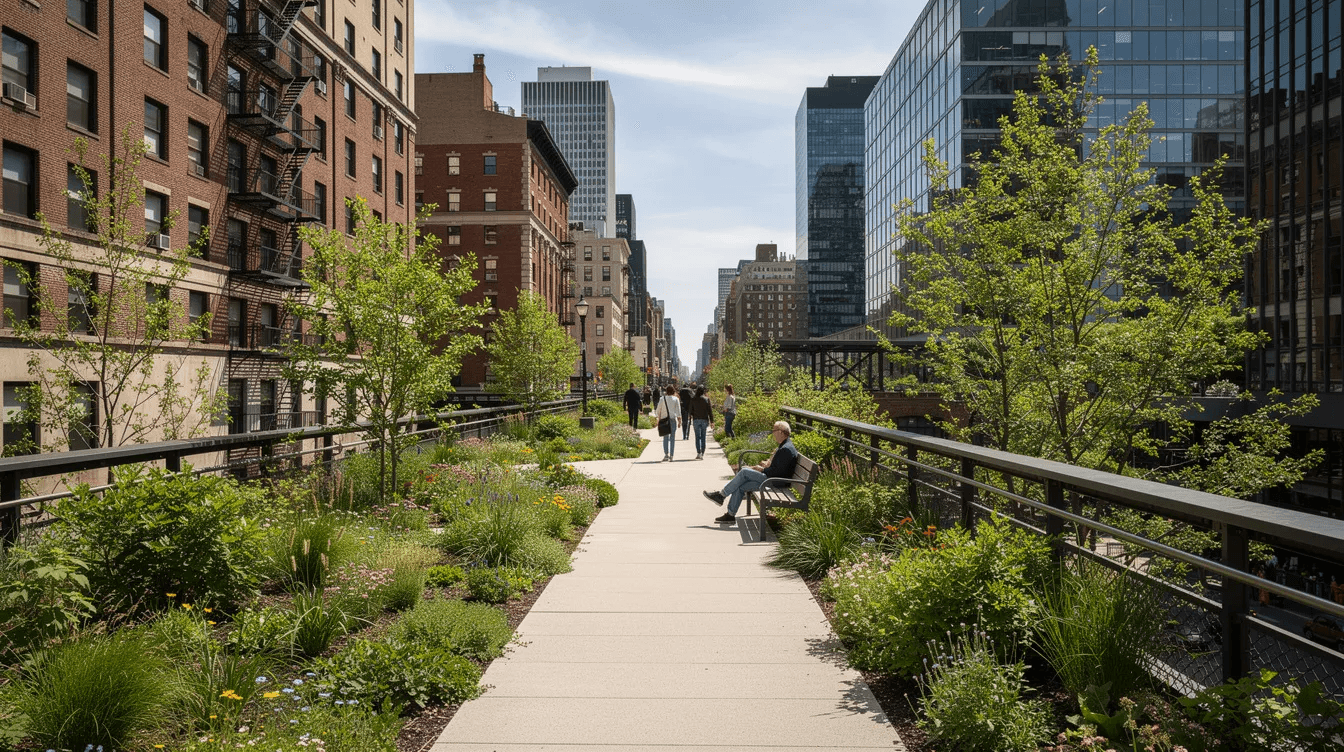
Chelsea is recognized as one of the trendiest neighborhoods in New York City, featuring a vibrant dining scene and the High Line, which offers unique green space and art installations. The elevated park draws 8 million visitors annually and connects the neighborhood to hudson yards to the north.
Chelsea market occupies a former Nabisco factory and now hosts 10 million annual visitors seeking artisanal food vendors and local goods.
Best For
Art enthusiasts, couples seeking a trendy neighborhood vibe, and visitors who want great location access to both downtown manhattan and Midtown.
Key Strengths
- High Line elevated park provides unique green space with integrated public art
- Chelsea market delivers one of NYC’s premier food halls
- 350 galleries make this the contemporary art capital of the city
- Centrally located with good transit connections to major areas
- Restaurant scene spans casual to upscale with many great restaurants
- Proximity to union square, the meatpacking district, and greenwich village
Possible Limitations
- Hotel rates average $300-500 per night
- Subway coverage can be inconsistent in western sections
- Some blocks feel quiet at night
- Gallery district can seem intimidating to art novices
Hotels like Moxy Chelsea and Hyatt properties ($250-450) cater to the neighborhood’s design-conscious visitors. The area rewards those who appreciate art, food, and walkable urban environments.
Quick Comparison of the Best NYC Neighborhoods
Each neighborhood serves different traveler priorities. Here’s how they compare at a glance:
Neighborhood | Best For | Avg. Hotel Price | Transit Score |
|---|---|---|---|
Midtown Manhattan | First-time visitors, sightseeing efficiency | $400/night | Excellent (12 lines) |
West Village | Romantic getaways, dining enthusiasts | $450+/night | Good |
Flatiron District | Balanced convenience with character | $300-450/night | Excellent (6 lines) |
Upper West Side | Families, repeat visitors, quiet stays | $250-400/night | Good |
SoHo | Shopping lovers, fashion focus | $400-600/night | Good |
Williamsburg | Trendy Brooklyn experience, foodies | $300-500/night | Limited (L train) |
Financial District | Budget travelers, history buffs | $220/night avg | Excellent |
Chelsea | Art enthusiasts, couples | $300-500/night | Good |
Summary by primary strength: |
- Midtown Manhattan – Best for first-time visitors wanting iconic NYC experiences
- West Village – Best for romantic atmosphere and intimate dining
- Flatiron District – Best for balanced convenience without chaos
- Upper West Side – Best for families and peaceful residential feel
- SoHo – Best for shopping and architectural photography
- Williamsburg – Best for trendy local experience with skyline views
- Financial District – Best for budget-conscious travelers and history
- Chelsea – Best for art lovers and food market enthusiasts
How to Choose the Right Neighborhood for Your NYC Stay
Choose Based on Your Trip Purpose
Your reason for visiting new york should drive your neighborhood selection more than any other factor.
First-time vs. repeat visitors:
For your first trip, proximity to major attractions justifies the premium of areas like Midtown or Flatiron. Data shows 80% of first-time visitors choose centrally located neighborhoods. The subway learning curve and sheer scale of the city make central bases more forgiving.
Repeat visitors often graduate to cool neighborhoods like Williamsburg or the West Village, trading convenience for character. If you’ve checked off times square and the empire state building, staying in Brooklyn delivers fresh perspectives.
Business vs. leisure:
Business travelers benefit from Midtown’s proximity to corporate offices and convention centers near penn station and grand central. The financial district serves wall street adjacent meetings. Leisure travelers have more flexibility to prioritize neighborhood vibe over commute times.
Solo, couple, or family:
Solo travelers thrive in walkable neighborhoods with coffee shops and casual dining like the east village or Williamsburg. Couples often prefer the romantic streetscapes of the West Village. Families need space and safety, making the upper west side’s larger hotel rooms and park access ideal.
Choose Based on Your Budget
Hotel pricing varies dramatically across neighborhoods, and understanding the landscape helps maximize value.
Most expensive areas:
SoHo averages $400-600 per night, with few nights available under $350. West Village properties command similar premiums due to limited hotel inventory.
Best value areas:
The financial district consistently offers lower manhattan’s best hotels for the price, averaging $220 per night with larger rooms. Long Island City and Williamsburg are great for lower budgets and scenic skyline views.
Long Island City is a top choice for modern hotels with incredible views and offers better value just one subway stop from Manhattan. The further out you stay in New York City, the cheaper accommodations tend to be.
Budget accommodations in New York City can be found in various neighborhoods, but there is no single area that has all the budget options available. If you’re on a tight budget, consider mixing a few nights in premium neighborhoods with longer stays in value zones.
Value sweet spots:
The Flatiron District delivers Midtown-adjacent convenience at 15-20% lower rates. jersey city hotels across the Hudson offer Manhattan skyline views with significant savings, though adding commute time.
Choose Based on Transportation Preferences
Subway access fundamentally shapes your daily experience in new york city.
Best transit connections:
Midtown Manhattan and the Flatiron District offer access to 10+ subway lines, enabling travel to 85% of destinations without transfers. Grand central and penn station provide regional rail and airport connections.
Walkability priorities:
The West Village, SoHo, and Flatiron all score 95+ on walkability indexes. Staying in these areas reduces transit dependence for neighborhood exploration while maintaining good subway connections for longer trips.
Airport access:
From Midtown, JFK is reachable in approximately 45 minutes via LIRR to Jamaica and the AirTrain. LaGuardia requires taxi or rideshare. Newark connects via NJ Transit from penn station. The financial district offers easy access to downtown brooklyn and Brooklyn’s airport shuttles.
Neighborhoods like midtown east and midtown west differ primarily in their proximity to grand central versus penn station—choose based on your arrival and departure logistics.
Which NYC Neighborhood Is Best for You?
Making a final decision comes down to matching your priorities with neighborhood strengths. Here are direct recommendations:
Choose Midtown Manhattan if:
- This is your first trip to new york and you want maximum sightseeing efficiency
- You’re traveling for business near Times Square, grand central, or penn station
- You prefer being within walking distance of icons like the empire state building and central park
- You don’t mind crowds and noise in exchange for convenience
Choose the Flatiron District if:
- You want a centrally located base without Midtown’s intensity
- Great restaurants and dining variety matter to you
- You’re visiting for a few nights and want to maximize exploration time
- You appreciate architectural interest like the iconic flatiron building
Choose Upper West Side if:
- You’re traveling with family and need space plus safety
- Central park access for morning walks or kids’ activities is important
- You prefer a residential neighborhood feel
- You’ve visited NYC before and want a different pace
Choose West Village or SoHo if:
- Charming atmosphere and boutique hotel experiences appeal to you
- Dining and shopping rank high on your priorities
- Budget is flexible enough for premium pricing
- You value walkability within a beautiful neighborhood
Choose Williamsburg if:
- You’ve experienced main tourist attractions and want local flavor
- Food scene exploration and nightlife interest you
- Skyline views and waterfront access sound appealing
- You’re comfortable with 20-30 minute subway commutes
Choose Financial District if:
- Budget matters and you want affordable hotels in Manhattan
- History, including 9/11 Memorial and wall street, interests you
- Weekend or holiday travel timing lets you capture hotel bargains
- You don’t mind quieter evenings in exchange for lower prices
Choose Chelsea if:
- Art galleries, chelsea market, and the High Line draw you
- You want to stay in new york’s trendier neighborhoods
- A nice hotel with rooftop bar access sounds ideal
- Central location with character matters more than rock-bottom prices
Final Thoughts
The best location to stay in new york depends entirely on what you want from your trip. There’s no universal right answer—only the right answer for your priorities, budget, and travel style.
Manhattan neighborhoods deliver convenience and proximity to the major attractions that define new york city in the popular imagination. You’ll spend less time in transit and more time experiencing the iconic sights. The trade-offs involve higher prices and tourist-heavy atmospheres, particularly in Midtown.
Brooklyn and outer-borough options like long island city provide authenticity and better value. You’ll eat where locals eat, shop at independent shops rather than chains, and see the skyline rather than being lost in it. The cost is commute time and distance from traditional sightseeing.
What matters most is matching your choice to your goals. A family with young children and five days has different needs than a solo traveler spending a few nights focused on food and nightlife. A first-time visitor prioritizing iconic experiences differs from a repeat visitor seeking deeper neighborhood immersion.
All eight neighborhoods in this guide deliver excellent bases for experiencing new york city. Each has been vetted for safety, transit access, dining quality, and overall traveler satisfaction. Choose based on what draws you to NYC in the first place, book accommodations that fit your budget, and trust that any of these areas will serve you well.
New York rewards exploration, and the neighborhood you choose shapes the adventure you’ll have. Pick one that matches your vision, and start planning the details.